FIFA WORLD CUP: Another step into history for the Estadio Azteca
CHIBUOGWU NNADIEGBULAM / AIPS —- In one week the legendary Estadio Azteca in Mexico City will become the first stadium to stage three FIFA World Cup opening games in an iconic venue whose historical significance runs deep.
Its ground houses a treasure trove of some of the tournament’s timeless masterpieces, including the career-defining coronations of two of the world’s greatest footballers of all time, Brazil’s Pelé and Argentina’s Diego Maradona.
The FIFA World Cup 2026 opening match is set to evoke a feeling of nostalgia when Mexico and South Africa walk onto the pitch in a repeat of the 2010 edition’s opening fixture.
Their momentous meeting 16 years ago in Johannesburg, enlivened with the boisterous buzz of vuvuzelas, ended in a 1-1 draw. This time Mexico is hosting and, interestingly, South Africa will be marking their return to the global stage for the first time since 2010.
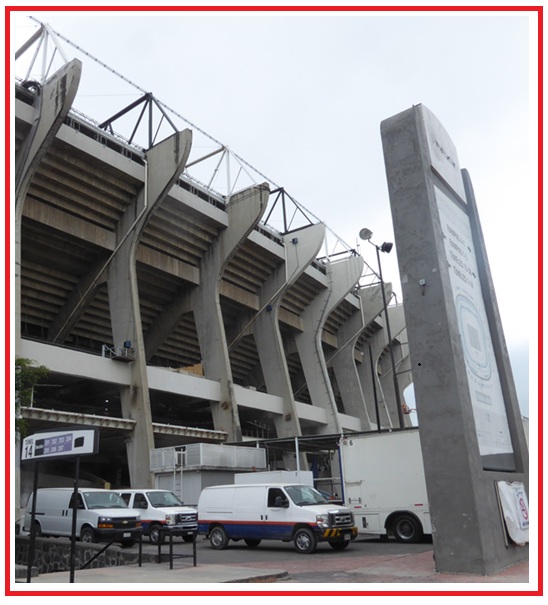
As Mexico prepare to play in the official opening game of a FIFA World Cup for the sixth time, their hope would definitely be to finally secure a win after three defeats and two draws.
While Mexico are desperate to break the “curse of the fifth game”, the co-hosts, under the guidance of Javier Aguirre, would want to ignite a strong belief in their passionate fans from the outset next Thursday. In the 1970 and 1986 tournaments Mexico didn’t lose any match at their hallowed Azteca.
A victory for either Mexico or South Africa on June 11 will create a new piece of history for the storied stadium, following the draws in the opening matches of Mexico 1970 and 1986.
Kickoff
The 1970 tournament, which marked the first time the World Cup arrived in Central/North America, kicked off with a goalless draw between Mexico and Soviet Union in front of more than 107,000 fans. That match witnessed the first official substitution at a World Cup when Anatoliy Puzach came on at halftime for Viktor Serebryanikov.
It was also the last time until 2006 that the host nation’s first match opened the tournament – between 1974 and 2002 it became the role of the defending champions. Bulgaria and Italy shared the spoils (1-1) in the opening match of the 1986 World Cup, which Mexico had stepped in to host after Colombia pulled out for economic reasons.
Beyond the opening draws, however, the stadium, which opened in 1966 and first welcomed the globe for the 1968 Olympic Games, has played host to some of the most memorable moments in World Cup history, including the Game of the Century, Hand of God goal and the Goal of the Century.
Attendances
The stadium also boasts six of the 10 biggest attendances in World Cup history, including the record attendance for a final which was achieved when 114,600 people watched Argentina beat West Germany 3–2 to lift the 1986 trophy.
The stadium hosted 10 games in 1970 and nine in 1986 and is set to host five matches in 2026, while Guadalajara and Monterrey will host four matches apiece. The group stage will see 12 teams play at least one match in Mexico.
In the words of Pelé, as quoted by FIFA: “There’s just something very special about the Azteca. You need to be inside it, to feel it to understand. It’s unique.”
The Brazilian icon wrote his name in gold at the Azteca when he led his country to the World Cup title and became the first (and to date only) player to lift three World Cup trophies. He was named the best player of the tournament. Mexico 1970 also produced the Game of the Century – Italy’s 4-3 win over West Germany in the semi-finals.
Maradona
Some 16 years later Diego Maradona mesmerised the world as he took Argentina to the promised land at Estadio Azteca. Although his contribution to the winning goal in the final against West Germany is highly regarded, his riveting performance in Argentina’s 1986 quarter-final victory over England on the same pitch is widely considered “the greatest individual exhibition ever witnessed on football’s grandest stage”.
His controversial “Hand of God” and jaw-dropping “Goal of the Century” helped Argentina secure a 2-1 victory. He was named the best player of the 1986 tournament.
It was during the 1986 FIFA World Cup that the “Mexican Wave” became a global phenomenon and has continued to be a symbol of unity at football stadiums across the world. To mark 40 years of this famous spectacle, Mexico City seeks to gather thousands of people on June 6 to set an official Guinness World Record for the “largest human wave in the world”.
###