Cricket mourns Sir Garry Sobers . . . the sport’s greatest all-rounder
—– Sir Garfield Sobers, the legendary Barbadian cricketer universally acclaimed as the most complete all-rounder the sport has ever produced, as died at 89.
His passing marks the end of an era for international sports, closing the book on a career that came to define the golden age of West Indian cricket. Armed with an elegant, powerful batting style, an astonishingly versatile bowling repertoire, and breathtaking reflexes in the field, Sobers transcended the sport to become a global cultural icon.
Known affectionately worldwide as “Garry,” or simply “King Cricket,” Sobers did not merely play the game; he revolutionized it with a combination of supreme athletic genius and an irrepressible, adventurous spirit.
Born in Bridgetown, Barbados, on July 36, 1936, Garfield St Aubrun Sobers faced hardship from his earliest days. Born with an extra finger on each hand—which he later removed himself as a boy using a sharp knife—he lost his father at sea during the Second World War when he was only five years old.
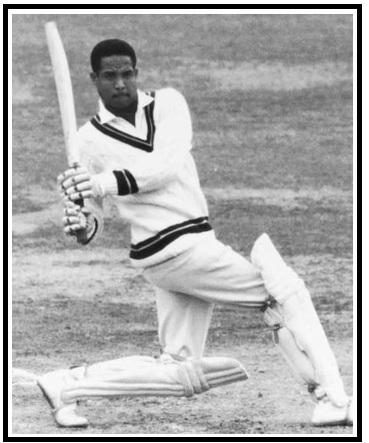
Despite these early challenges, his natural sporting talent was impossible to ignore. Sobers excelled at football, basketball, and cricket, but it was on the sun-baked pitches of Barbados where his destiny lay. He made his first-class debut for Barbados at the tender age of 16, playing primarily as a bowler.
By 1954, at just 17, he was called up to make his Test debut for the West Indies against England. Though he entered international cricket as a spin bowler batting lower down the order, his immense potential with the bat quickly saw him elevated to the top tier of international batsmen.
It was in 1958, during a Test match against Pakistan in Kingston, Jamaica, that Sobers permanently etched his name into the annals of sporting history. At just 21 years old, he struck an unbeaten 365, shattering the previous world record for the highest individual Test score held by England’s Sir Len Hutton. The record would stand for 36 years.
Yet, Sobers’ brilliance was defined by his ability to dominate every single facet of the game. He remains the gold standard for all-rounders because he did not simply contribute in multiple disciplines—he excelled at a world-class level in all of them.
- The Batsman: Over 93 Test matches, he scored 8,032 runs at an extraordinary average of 57.78, including 26 centuries. His batting combined West Indian flair with a classical, ferocious power;
- The Bowler: He claimed 235 Test wickets, uniquely capable of switching between fast-medium opening spells, orthodox left-arm orthodox spin, and deceptive left-arm wrist spin (chinamen).
- The Fielder: Widely considered one of the greatest close-in fielders of all time, his feline reflexes at short-leg or slip turned improbable chances into historic dismissals.
In 1965, Sobers was appointed captain of the West Indies, leading the side through a highly successful seven-year tenure. Under his leadership, the West Indies played a brand of cricket that was as joyful as it was formidable, cementing their status as the world’s most entertaining team.
Six sixes
For all his statistical achievements, Sobers was equally famous for a single, dazzling over on a late summer afternoon in Wales. On August 31, 1968, while captaining Nottinghamshire against Glamorgan at Swansea, Sobers became the first batsman in the history of first-class cricket to it six sixes in one over.
The unfortunate bowler, Malcolm Nash, could only watch as Sobers dispatched five consecutive balls clean out of the ground. The sixth ball was caught over the boundary rope by a spectator, cementing a feat of explosive hitting that captivated sports fans worldwide and remains one of cricket’s most legendary moments.
The relentless demands of a career spent traveling the world eventually took their toll. Sobers retired from international cricket in 1974 at the age of 38, hampered by a recurring knee injury and the sheer exhaustion of carrying his team’s batting, bowling, and captaincy duties for over a decade.
Following his retirement, the accolades flowed continuously. In 1975, Queen Elizabeth II traveled to Barbados to bestow a knighthood upon him on the turf of the Garrison Savannah, the very ground where he had played as a boy.
In 1998, the government of Barbados officially designated Sir Garfield as one of the country’s National eroes an honour that cemented his role as a foundational symbol of the island’s modern identity. When the International Cricket Council introduced its annual award for the World Player of the Year, it appropriately named the accolade the Sir Garfield Sobers Trophy.
Sir Garry spent his later years serving as a global ambassador for cricket, mentoring young athletes and indulging his lifelong passion for golf. He remained a beloved presence at grounds like Lord’s and Kensington Oval, where generations of fans would stand just to catch a glimpse of the man who had personified the soul of the sport.
He is survived by his two sons, Matthew and Steven, and a global community of cricket enthusiasts who mourn the loss of an irreplaceable titan.
###