FIFA crisis: Prince Ali adds his own voice to attacks on Infantino
ZURICH: For eight years, Gianni Infantino ruled world football with the quiet, calculated confidence of a man who believed the game’s traditional powers were powerless to stop him. He expanded the World Cup, invented lucrative new tournaments out of whole cloth, and treated global football’s crown jewels as his personal hoard.
Yet now the Swiss-Italian administrator finds himself fighting a desperate, multi-front war for his political survival. What began as a secretive, audacious bid to privatise FIFA’s core assets has detonated into the most severe governance crisis to strike Zurich since the FBI raided the Baur au Lac hotel in 2015.
With key confederations threatening outright boycotts, his own administration fracturing from within, and explosive allegations of extortion surfacing from member nations, Infantino’s iron grip on the sport is suddenly slipping.
The catalyst for this extraordinary meltdown was “FIFA Forward Enterprise” (FFE)—a stealthily drafted proposal to spin off FIFA’s primary commercial operations into a separate $20 billion subsidiary.
Under Infantino’s vision, a 20 per cent stake in the new entity was to be sold to private equity investors, led by New York firm Thrive Capital. Infantino offered a sweetening bribe to the masses: a quick $20 million cash windfall for each of FIFA’s 211 member associations, provided they approved the measure by mid-September. Instead of securing his legacy, the gambit backfired catastrophically.
The idea that the World Cup—a sacred cultural institution—could be partially sliced up and handed to private equity triggered instant rage across the globe. Within days, UEFA and CONCACAF formed an unprecedented united front.
UEFA’s 55 member nations unanimously declared they would boycott the World Cup and all FIFA competitions if the plan moved forward, stating bluntly: “Some things are simply too important to sell. The FIFA World Cup belongs to football… long as Europe has a voice, it will never be for sale.”
Realising he had overplayed his hand, Infantino hastily withdrew the proposal over the weekend. But abandoning the scheme has not contained the radioactive fallout.
Perhaps the most damning blow to Infantino’s authority has come from inside FIFA headquarters.
The narrative that this was an official FIFA initiative collapsed when senior leaders openly disavowed the project, exposing a deep, rotten rift at the top of the organisation.
Carlos Cordeiro, the former Goldman Sachs banker and Infantino insider, abruptly resigned, publicly condemning the FFE scheme as “a bad deal for football.”
Chief Operating Officer Kevin Lamour publicly accused Infantino of deceiving staff, calling FFE “the project of one person” and urging football’s political leaders to intervene.
In a leaked internal memo sent to all FIFA staff today, Secretary General Mattias Grafström – long considered Infantino’s right-hand man – described the entire affair as a “sad and reproachable series of events” that was “difficult to comprehend and accept.”
Grafström’s message carried a chilling, thinly veiled warning to his boss, reminding staff that in the grand history of world football: “Individuals, unstable moments, and unfortunate episodes come and go. The institution, its mission, and its responsibility towards world football continue.
“When your own Secretary General publicly labels your signature financial policy an “unfortunate episode” and pointedly notes that presidents “come and go,” the writing on the wall is no longer written in pencil, it is etched in stone.
As the administrative machinery crumbles, political opponents are seizing the moment to strike.
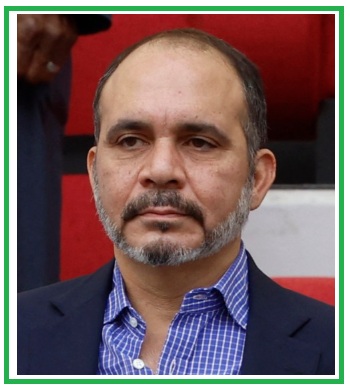
Prince Ali bin Al Hussein, president of the Jordan Football Association and a long-time advocate for FIFA reform, launched a blistering attack on Infantino’s methods.
Prince Ali accused FIFA of engaging in outright “blackmail,” alleging that the governing body held back legitimate financial dues – including prize money owed to Jordan for finishing as runners-up in the 2025 Arab Cup – and tied the resolution of administrative issues to a public pledge of support for Infantino in next March’s presidential election in Morocco.
The allegations strike at the core of Infantino’s political playbook: using financial leverage and distribution funds to guarantee the loyalty of smaller national associations while marginalising dissenters.
Now, with legal action being explored over the handling of the FFE proposal, those tactics are coming under intense scrutiny.
All eyes now turn to South America, where an emergency meeting of the FIFA Executive Committee is slated to take place in Colombia.
Once expected to be a victory lap for Infantino following the conclusion of the North American World Cup, the summit has transformed into a high-stakes political battlefield.
UEFA and CONCACAF officials are preparing to demand a full, independent inquiry into how a $20 billion deal was negotiated behind closed doors without board oversight. Multiple European federations, including the English FA, have already formally withdrawn their endorsement of Infantino’s candidacy for the 2027 election.
Infantino still retains significant support among blocs in Africa and parts of Asia, where FIFA’s development funds remain crucial. But his aura of invincibility has been shattered. He can no longer claim to govern by consensus, nor can he pretend that the opposition is limited to a few disgruntled European grandees.
When Gianni Infantino assumed the presidency in 2016, he promised to restore transparency and bring football back to FIFA, and FIFA back to football. Instead, his tenure has become increasingly defined by imperial overreach, secretive decision-making, and an appetite for institutional expansion that has alienated the very people who power the game.
The failed attempt to sell off a fifth of football’s commercial soul to private equity was not merely a tactical blunder; it was a fundamental misreading of the room. As football’s powerbrokers prepare to land in Colombia, Infantino faces an agonising truth.
He may still hold the title of FIFA president, but the global coalition that put him there has fractured beyond repair.
####