Lionel Messi decides it’s all over now with Argentina
KEIR RADNEDGE COMMENTARY —- Lionel Messi has retired from national team football at least twice before but his latest decision to step away from Argentina’s Albiceleste appears conclusive.
The 39-year-old’s potential final bow was the 2-1 extra-time defeat by Spain in the World Cup Final in New Jersey.
His losers’ tears came four years after his crowning glory at the tournament in Qatar when he captained Argentina to become world champions for a third time, first in 36 years.
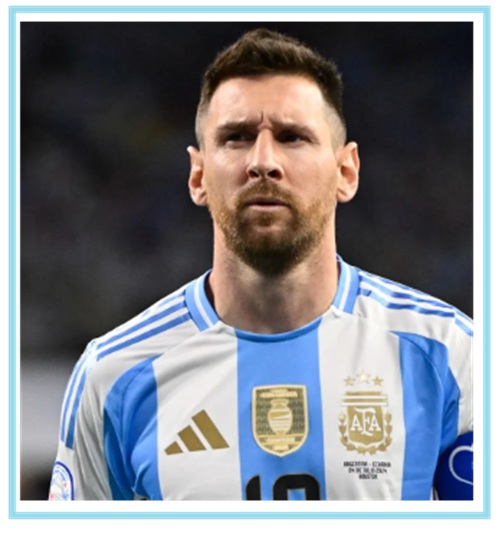
Captain Messi scored twice in the 2022 final in the Lusail Iconic Stadium as his side drew 3-3 with defending title-holders France after extra-time, before successfully dispatching his opening spot-kick in the penalty shoot-out.
Messi, whose appearance that day was a record-extending 26th at FIFA World Cup tournaments, had long been hailed as one of the world’s greatest footballers of all time, perhaps the best ever. He was also one of many Argentina stars to be labelled ‘the new Maradona’ – and now he had emulated Diego, captain and star of the nation’s 1986 World Cup glory.
The US has become Messi’s home since signing for Inter Miami in Florida in 2023, from France’s Paris Saint-Germain.
His career began in his homeland Argentina in Rosario, the city of his birth, but the majority of it was spent in Spain. He was signed by Catalan giants Barcelona at the age of 13, with the club paying towards essential growth hormone treatment – something no Argentinian club could afford.
Messi swiftly emerged as not only a dazzling dribbler – former Barcelona manager Pep Guardiola once told of how he appeared to run even faster with the ball than without it.
He also made his mark as both a consistent scorer of goals and consistent scorer of spectacular goals.
Messi’s time at Barcelona included club records of 778 appearances and 672 goals, as well as three UEFA Champions League titles – the first coming in 2009, a year in which he helped Barcelona win six trophies.
These were not only the treble of Spain’s La Liga and Copa Del Rey as well as the UEFA Champions League, but also the UEFA Super Cup, the FIFA Club World Cup and the Spanish Super Cup.
His international career actually began ignominiously, sent off two minutes after coming on as a substitute in a friendly against Hungary in August 2005. Yet the following year he became Argentina’s youngest FIFA World Cup goalscorer, aged 19, in a 6-0 victory over Serbia and Montenegro in Germany – and has since shattered records as the nation’s most-capped player and leading goalscorer.
He won the Golden Ball prize for best player at the 2014 FIFA World Cup, despite Argentina losing the final 1-0 to Germany – and became the first player to claim the award twice, eight years later, in happier circumstances following the final against France.
Messi has also been presented with the Ballon d’Or honour for the world’s finest footballer of the year an unprecedented eight times. His time with Barcelona ended in August 2021, connected to the club’s financial issues, when he moved to France’s Paris Saint-Germain, before his transfer to Inter Miami two years later.
His career was guided throughout by his father Jorge whose death on August 8 may just have been the final persuader that it was time to move to a new phase in his life.
###