FIFA CRISIS: What happens next is all down to UEFA and Ceferin
KEIR RADNEDGE COMMENTARY — The political ball is now firmly back in the court of UEFA after Gianni Infantino survived the initial storm over his scrapped by to commercialise the World Cup.
What began as a covert financial operation to core sectors of international football’s crown jewels has plunged into possibly the most severe governance crisis ever to hit FIFA, even more damaging than the FIFAGate corruption scandal which erupted in 2015.
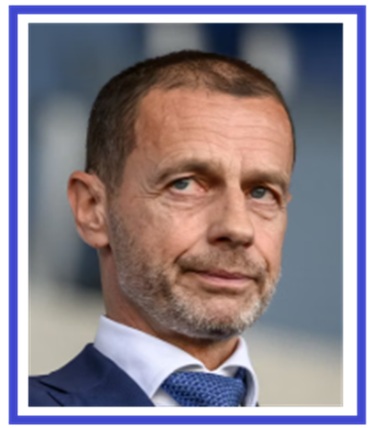
Now the game awaits the next move from the European federation and its president Aleksander Ceferin.
Over the las 14 turbulent days, world football has witnessed an internal mutiny, open threats of a European boycott, legal warnings, and a desperate effort by FIFA president Infantino to shore up his leadership of the world federation ahead of the 2027 elections.
The crisis erupted when details leaked regarding FIFA Forward Enterprise (FFE), a shadowy proposal conceived under Infantino’s direction.
This initiative aimed to create a commercial subsidiary that would sell minority stakes and profit shares of future World Cups to private equity investors, alongside floating proposals to expand the tournament to 64 teams.
The reaction within Zurich was immediate and severe. Far from commanding internal consensus, the FFE plan caused an instant rift within FIFA’s executive leadership. Senior officials claimed they were kept completely in the dark. Senior adviser Carlos Cordeiro tendered his resignation, while Chief Operating Officer Kevin Lamour publicly alleged that key staff had been “deceived” by a lack of transparency.
Rebellion
The internal rebellion reached a tipping point when FIFA secretary-general Mattias Grafström circulated a candid memo to global staff, describing the rollout as a “sad and reproachable series of events.”
The leaked news of the FFE proposal united European football in opposition. The European Leagues association – representing major domestic competitions including the Premier League, La Liga and Serie A – issued a scathing joint statement condemning the plan as a “dangerous” move that exposed systemic flaws in FIFA’s decision-making.
European stakeholders made it clear that unilateral decisions regarding match calendars, tournament expansions and private investments would no longer be tolerated. Shortly thereafter, individual national associations began taking decisive steps.
Withdrawal
England’s Football Association formally withdrew its backing for Infantino’s re-election campaign and called for a comprehensive review of FIFA’s leadership. The Football Association of Wales issued a vote of no confidence, citing failures in sound judgment, governance, and core values.
Serbia and Finland also annulled their own endorsement letters.
Former player Luis Figo publicly declared that Infantino had “debased the office,” while political leaders such as Prime Ministers Mark Carney of Canada and Andy Burnam of the United Kingdom stated publicly they no longer had confidence in Infantino’s leadership.
At this point UEFA deployed its nuclear option with the threat of a boycott of FIFA competitions. A unanimous statement demanded that the FFE scheme should be permanently dismantled and structural safeguards were put in place against any such revival in future.
If not then European national teams and clubs would refuse to participate in FIFA-organised tournaments, including the World Cup. Simultaneously, UEFA’s legal team sent a formal directive demanding that FIFA preserve all physical and digital records relating to the FFE proposal.
The notice named high-ranking figures, including development chief Arsène Wenger, warning that UEFA was actively preparing legal action, regulatory complaints, and arbitration against FIFA’s leadership.
Retreat
Faced with an existential split in world football, Infantino was forced into a rapid retreat. Within days, FIFA announced that the FFE proposal was “off the table” and offered an apology for how the process was handled.
Infantino, seeking to regain control of the narrative, convened an emergency summit at senior staff at FIFA’s African regional headquarters in Rabat, Morocco. The objective was clear – to present a united front, deliver a public declaration of internal unity and loyalty and demonstrate that he remained firmly in the driving seat.
A statement from this FIFA’s management board and secretary-general Grafström obediently reaffirmed support for Infantino’s presidency, framing the aborted FFE project as a mistake from which “lessons have been learned.”
However, controversy continued to follow the FIFA president. Reports emerged alleging that Infantino had privately promised Moroccan officials the right to host the 2030 World Cup final at the under-construction 115,000-seat Hassan II Stadium in exchange for crucial political backing – a claim FIFA swiftly denied as “false and misleading.”
Supporters
While Infantino managed to retain firm backing from confederations in Africa, Asia, and parts of CONCACAF, his standing in Europe remains severely fractured.
The fundamental crisis of governance remains unresolved.
UEFA was quick to dismiss FIFA’s internal crisis meeting as a staged exercise in self-preservation, noting that an apology from employees dependent on the president’s favour changed nothing.
The European association maintained that the conditions for lifting the boycott threat had not been met nor had it been provided with binding guarantees that private equity sell-offs would never be revisited.
The focus now shifts to whether UEFA and its allies can translate widespread discontent into a viable political alternative before the FIFA presidential election.
Names such as CONCACAF President Victor Montagliani have already been floated as potential consensus candidates capable of uniting reform-minded federations across continents.
Infantino may have saved his job for the moment by abandoning his commercial gamble, but the political balance of power in world football has fundamentally shifted. UEFA now holds significant leverage and the run-up to the Women’s U-20 World Cup next month in Poland will demonstrate whether UEFA is serious in deploying its power.
###