Time for me to sign off too, says Ronaldo in following Messi’s lead
KEIR RADNEDGE COMMENTARY —- Cristiano Ronaldo, in a deeply personal, five-minute video address to the Portuguese nation, has formally brought down the curtain on a record-shattering career that lit up the global game.
The timing of the announcement just ahead of a crucial international window and without waiting for the upcoming squad reveal caught the footballing world by surprise. It follows closely behind the international retirement of his lifelong rival, Lionel Messi.
At 41 years of age, the Al-Nassr forward steps away from the Seleção das Quinas as men’s international football’s most decorated and prolific talisman.
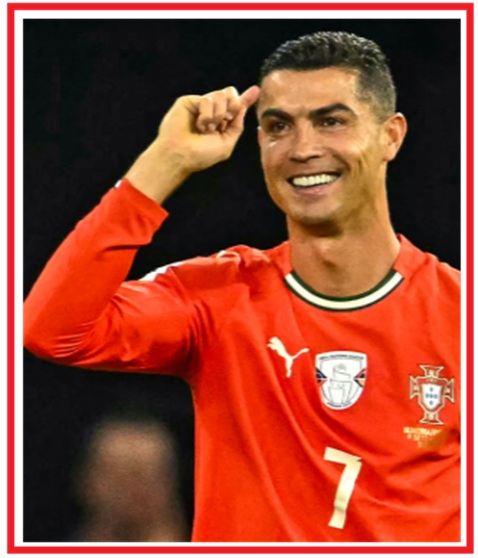
His international record stands as a monument to longevity and obsession with a world record 234 appearances and an unmatched 146 goals. Yet, as Ronaldo reflected in his farewell, the magnitude of his tenure cannot be fully captured by cold numbers alone.
He said: “When I look back at everything I experienced with the national team, I don’t just see matches, goals, records, or trophies. I see people.
“I see Portuguese people living abroad, who, for 90 minutes, felt a little closer to home… At the end of the day, football is so much bigger than a game. Football is about people.”
Madeira start
Ronaldo’s journey from Madeira to inspire Portugal began in August 2003 as an 18-year-old prodigy. Over the next two decades, he evolved from a dazzling, trick-heavy winger into one of history’s most lethal central and clinical goalscorers.
Along the way, he delivered the moments that defined modern Portuguese sporting history.
He captained his country to its maiden major international honour at Euro 2016, famously coaching and encouraging his teammates from the sidelines after an early injury in the final against France.
Three years later, he added the inaugural UEFA Nations League title to his resume. His career was also punctuated by historic milestones on the global stage: becoming the first man to score at five, and subsequently six, FIFA World Cups, breaking Ali Daei’s long-standing international scoring record, and continuously pushing the boundaries of athletic endurance.
Yet, his exit arrives following a turbulent period. Following a high-profile disagreement with national team coach Jorge Jesus and a brief suspension earlier in the autumn, questions had swirled regarding his immediate international future. Rather than letting a late-career controversy define his departure, however, Ronaldo chose to author his own final word.
While the recent friction may have accelerated the timeline, his farewell statement bypassed bitterness, focusing instead on gratitude and national pride.
He said: “I spent my life working to be the best player in the world. Today, I realise that my greatest victory was earning the honour of representing the best country in the world.”
Future questions
For Portugal, the challenge moving forward will not merely be tactical, but psychological. Finding a player capable of replicating Ronaldo’s output is an impossible task; instead, Portuguese football must now pivot toward a new generation born in the shadow of his colossal shadow.
Players such as Bruno Fernandes, Bernardo Silva and a rising crop of youngsters will inherit a squad that expects nothing less than total excellence.
Ronaldo acknowledged this shifting of the guard, noting that it is time to “pass it on to the future.”
“The No7 shirt will remain,” he promised. “The pride of having worn it will be mine forever. Portugal will always be a part of me.”
###